2026 · 5Rights Foundation
Mind the Platform Gaps
Aiman Bin Zahid, Aw Yong Mei Fong Jaime, Bautista Beatrice Regine Poblete, Seah Zhen Yu Bryan, Yap Rui Xuan Charlotte
A campaign designed to make the gaps and dangers of digital platforms impossible to ignore.
Every day, millions of people across ASEAN step onto trains without questioning whether the platforms they use are safe. To these people, the train is but a part of their daily commute – to school, work, or other parts of the city. Yellow lines, warning announcements and other safeguards have become an expected, yet unnoticed part of their commute.
But what if these safeguards disappeared? What if the gap between the train and platform (that people pay no attention to) suddenly became wide enough for a child to easily fall through?
We would never accept such dangerous designs, and outrightly missing safeguards in our everyday transport. So why should we accept it on the digital platforms children use every day? Both transport platforms, and digital platforms have become necessities for the children of today. But why do we seek to limit children’s access to such digital platforms the moment we realise it becomes unsafe? Why do we not question the design in the first place?
This is the fundamental question behind Mind the Platform Gaps, a regional campaign that transforms an ordinary commuting experience into a powerful metaphor for children's online safety. This campaign seeks to align regional narratives from platform bans to platform design by drawing parallels between trains and their platforms to digital platforms, to expose the structural flaws of digital spaces.
OUR CAMPAIGN The campaign's unique point lies in the double meaning of the word “platform”.
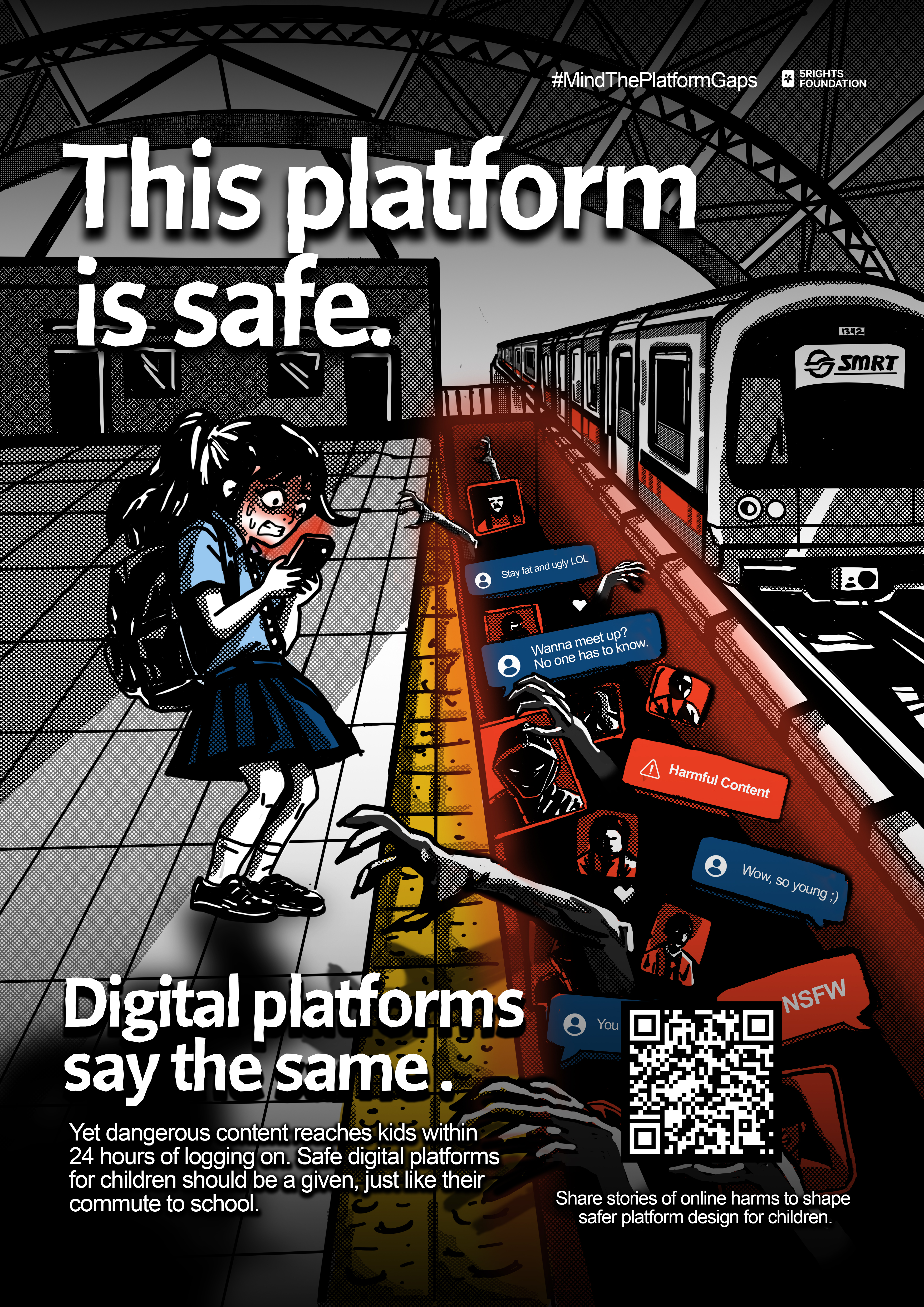
Physical train platforms are designed with safeguards to protect commuters. Yet digital platforms, despite being equally important in children's everyday lives, can expose them to dangers arising from inadequate design.
By exaggerating the physical gap between a train and its platform, the campaign transforms invisible digital risks into something immediately recognisable.
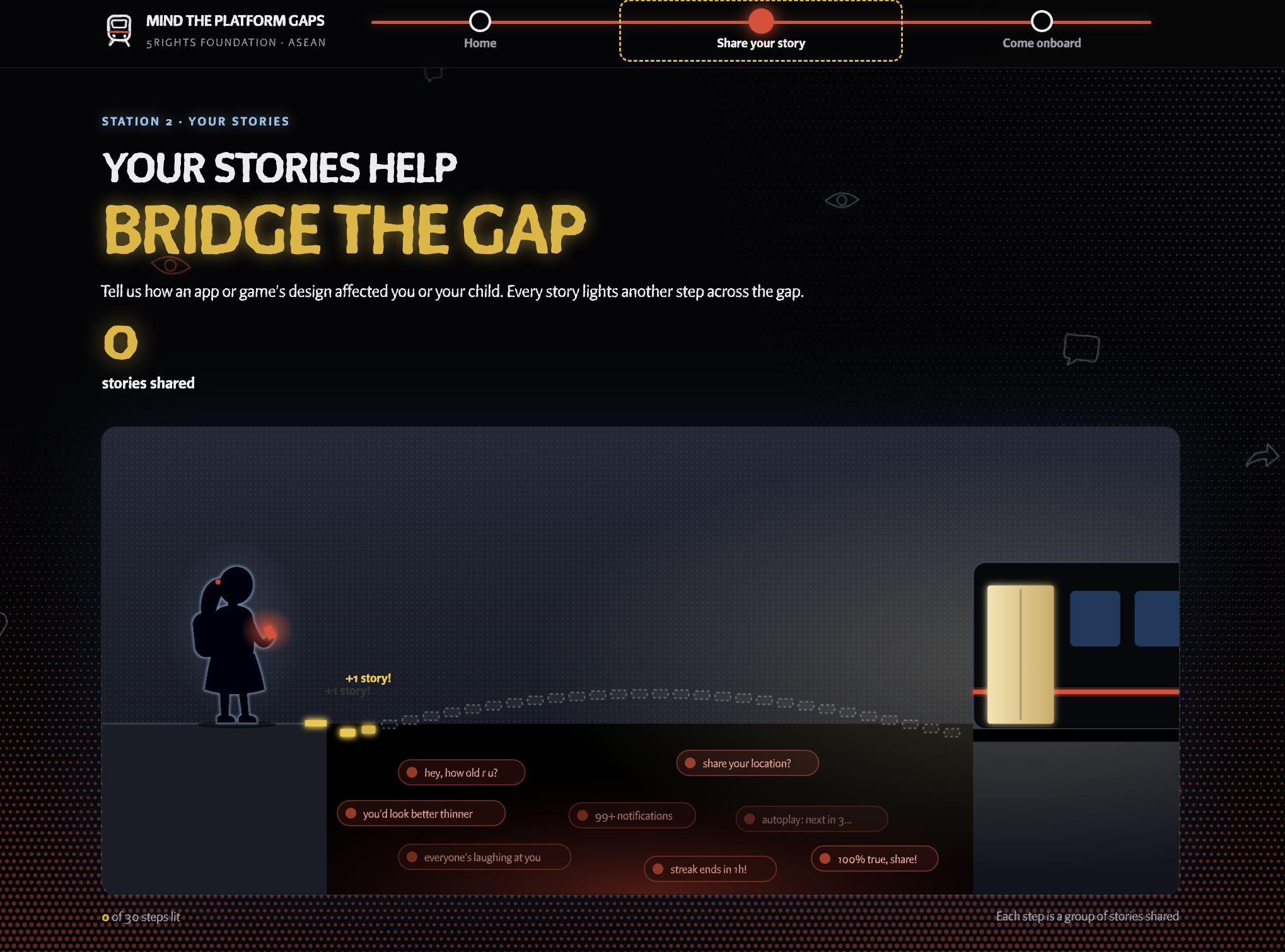
Our central visual depicts a child standing beside a train, separated from it by an obviously dangerous gap. Within this gap exists representations of harmful online experiences, depicted as hands reaching out to grab the child. This exposes the threats children may encounter when digital spaces lack sufficient safeguards, and evokes a sense of urgency to take action before it is too late. By evoking a sense of fear for a child’s safety, the campaign seeks to encourage a wider sense of ownership over children's digital well-being.
Our campaign visuals make the issue relatable to everyday people by using train platforms familiar across ASEAN. This draws upon shared values of family, community, and collective responsibility.
MAIN AUDIENCE Much of the existing conversation around child online safety takes place among policymakers, regulators and advocacy organisations. Yet meaningful policy change also depends on whether the wider public recognises the issue and believes it deserves attention.
Mind the Platform Gaps takes a bottom-up approach, beginning with the people whose collective voices can strengthen the call for change.
The general public is our primary audience because they represent an opportunity to build widespread awareness and shared concern beyond existing child-rights advocates. By tapping into the publics’ community-centred values, we aim to move audiences beyond passive awareness towards active participation. The strategy then builds through compounding layers of influence. Publics generate collective concern and share experiences. CSOs and NGOs consolidate these voices into organised advocacy. Media outlets amplify the narratives into wider public discourse. Together, these layers seek to influence policymakers and technology companies in the long term.
The campaign will initially focus on five priority markets: Philippines, Malaysia, Indonesia, Singapore and Thailand. Their ongoing policy developments provide momentum for advocacy, while a shared feature of established train transport systems in each country ensures our messaging will be relatable even across different national contexts.
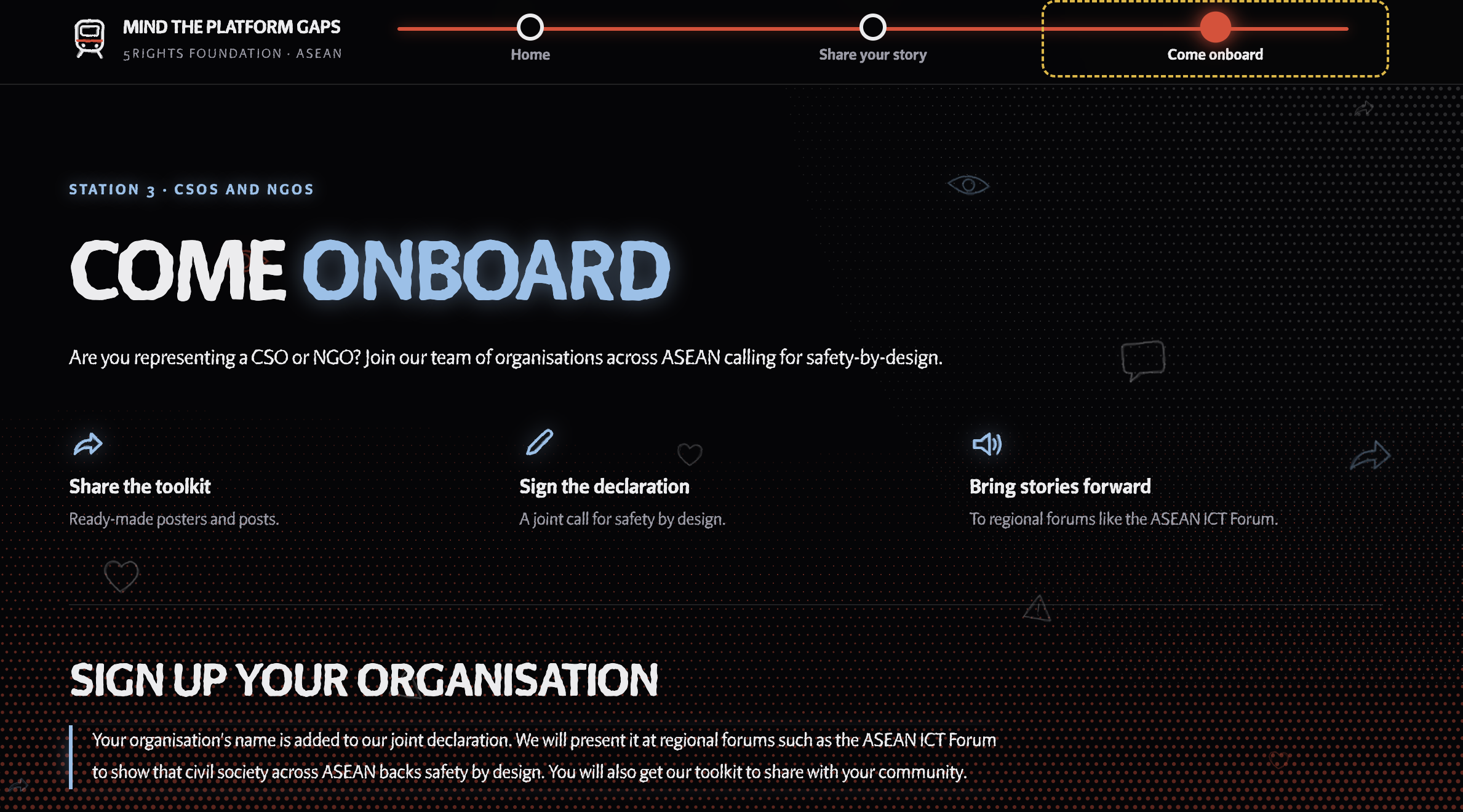
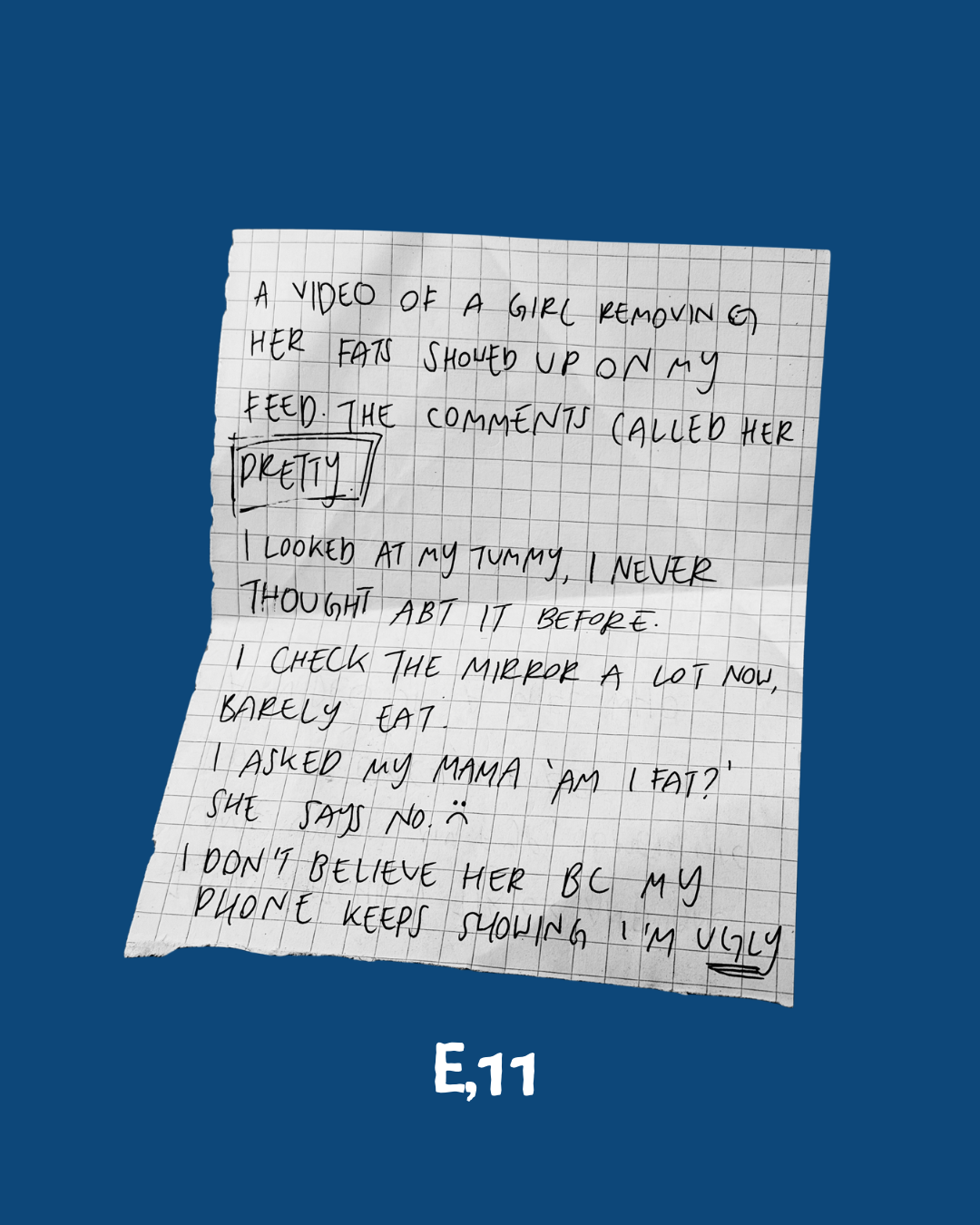
TACTICS One of our main tactics is a dedicated campaign microsite, designed to be a one-stop platform to engage our various stakeholders. Notably, the tab for Share Your Story invites the public to share their experiences with online harm in order to build a collective body of stories to support future advocacy efforts. The Come Onboard tab targets CSOs to amplify the message by utilising the toolkit provided, while supporting a joint declaration. The microsite therefore serves as both a public engagement platform and an advocacy resource.
Every supporting tactic is designed to bring audiences back to the microsite via a QR code.
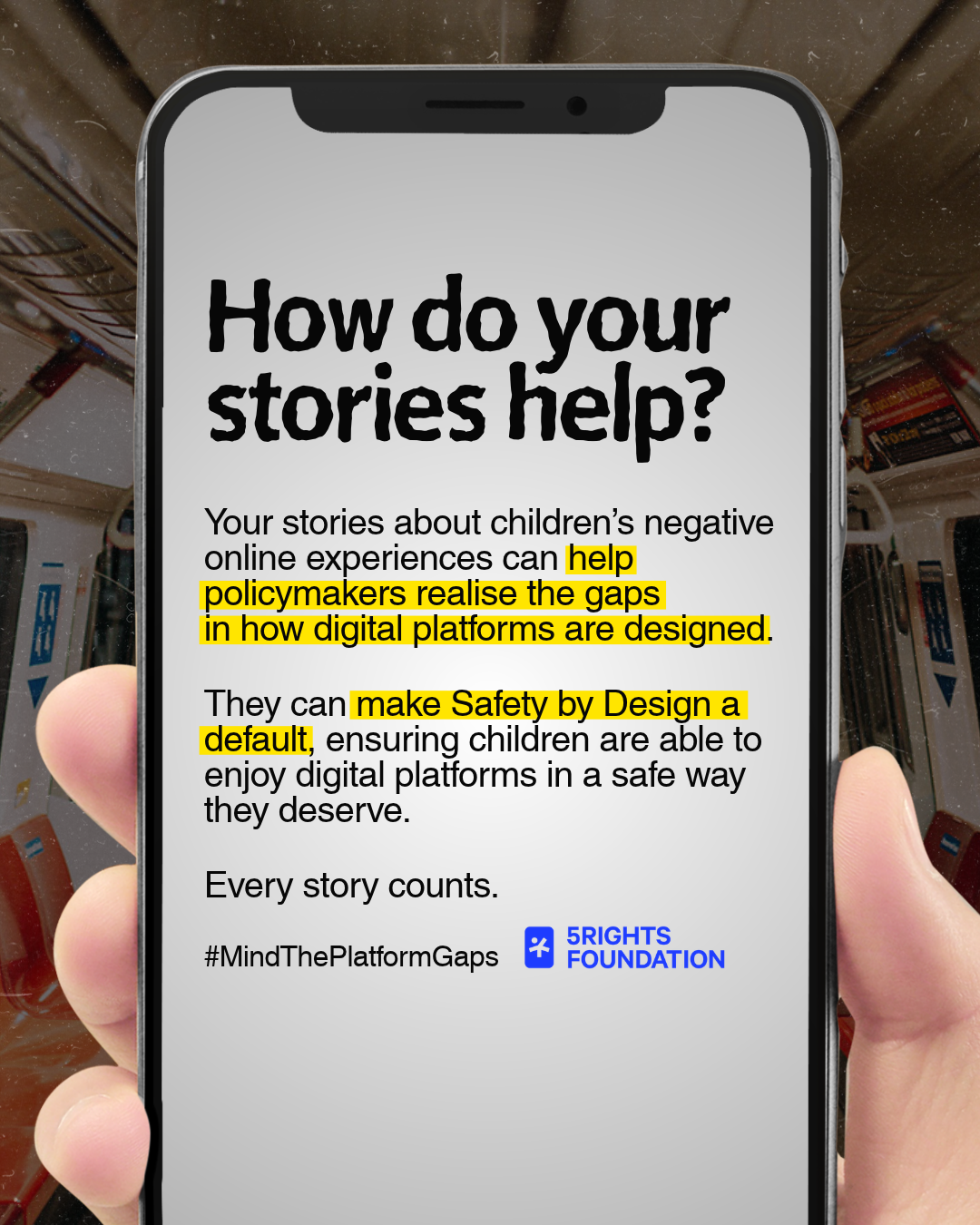
Social media: 5Rights' existing channels, particularly Instagram, will distribute campaign posters, videos, educational content and contributed stories. Targeted digital advertisements will help reach audiences across the five countries and direct them towards participation.
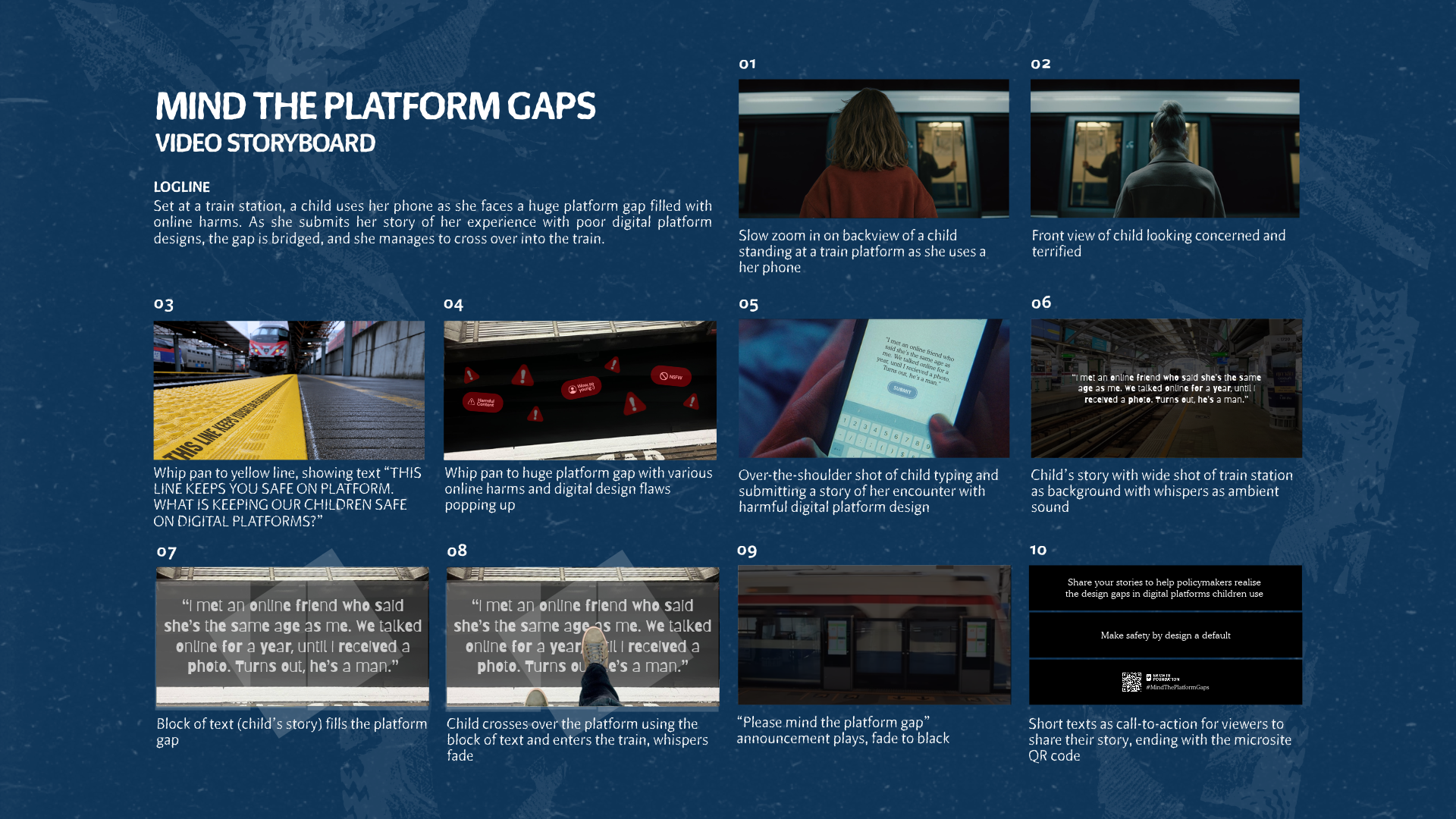
Campaign video: An emotionally driven narrative makes invisible online dangers visible through the train-platform metaphor, demonstrating how sharing experiences can help build a safer digital future.
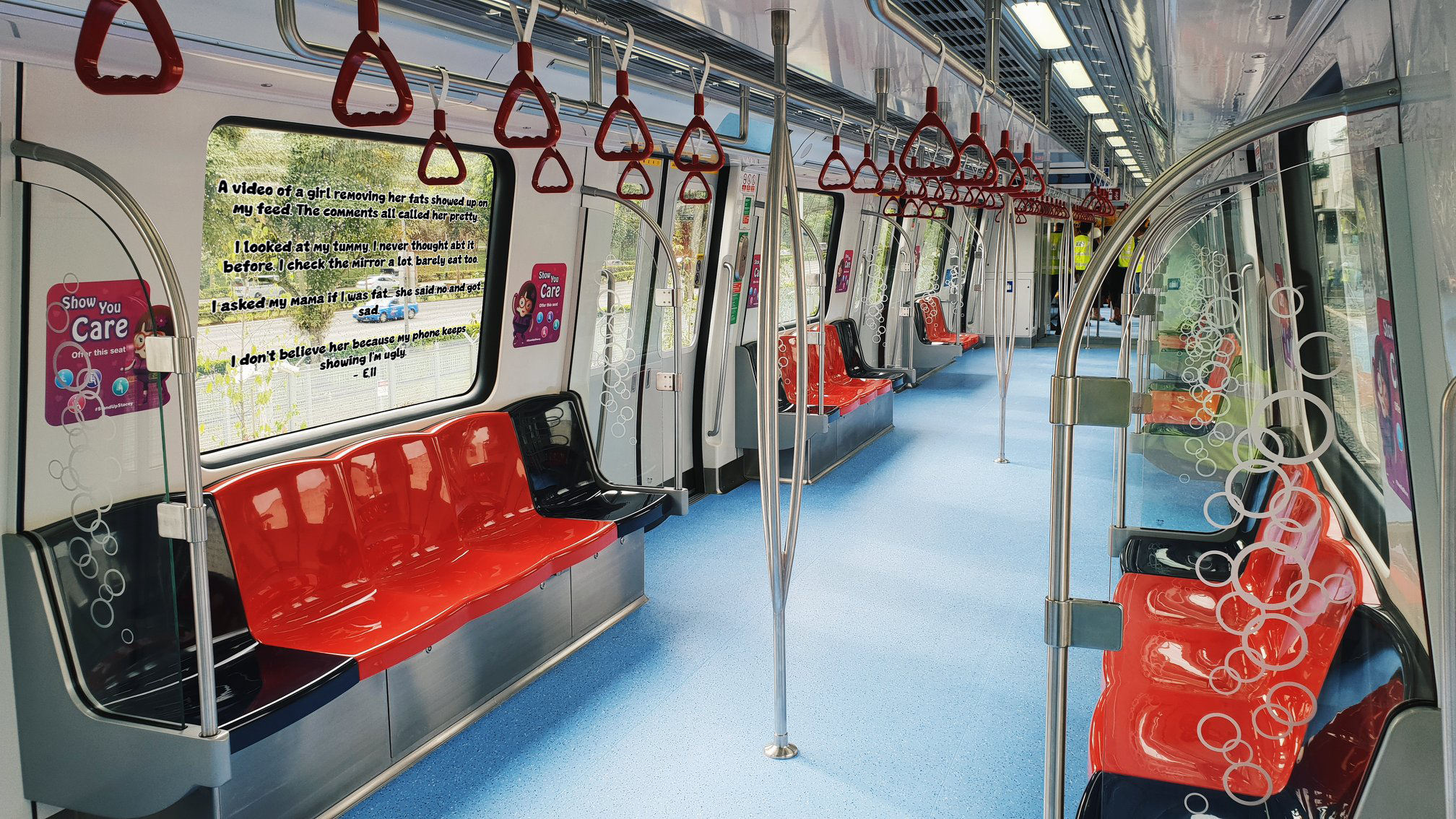
Out-of-home advertising: Subject to budget, posters and videos can appear at train stations and bus stops, placing the campaign in environments where its metaphor becomes especially powerful.
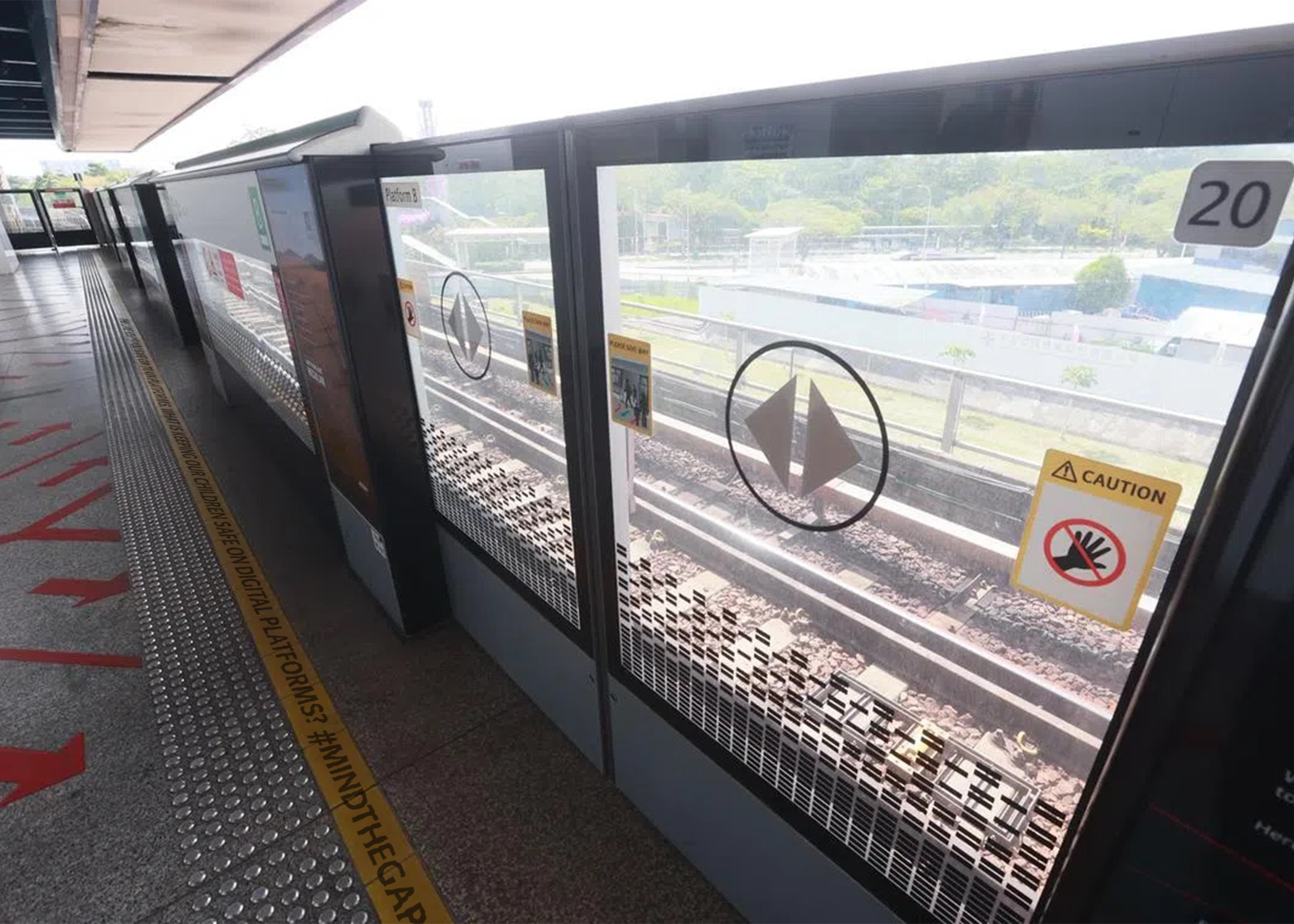
Hijacks: A proposed activation uses translated messages along existing platform safety lines, asking commuters to question why comparable safeguards are not expected of digital platforms.
Together, these tactics create multiple opportunities for discovery, but lead towards one central destination: the microsite, where audiences can take meaningful action.
THE BIG PICTURE The campaign's ultimate ambition is not simply to generate awareness, but to contribute towards changing how children's online safety is discussed. The proposed 2027 ASEAN ICT Forum serves as a key milestone of this campaign, where collected stories, a summary of public concerns and a joint CSO declaration can support discussions on stronger safety by design standards.
Safe digital platforms for children should be a given. Share stories of online harm to shape safer platform design for children.
#mindtheplatformgaps