2026 · 5Rights Foundation
Tainted By Design
Chin Weizi, Engel Leong, Kathleen Ang, Michelle Li, Ryanna Lee

Across Southeast Asia, digital harms threaten children’s rights (1). Yet, policy responses remain uneven, with attention on age-based restrictions (2). Although organisations advocate for safety-by-design, they largely focus on institutional engagement and information-sharing (3). Meanwhile, some initiatives emphasise digital literacy and individual responsibility over platform accountability (4).
But how can policymakers and the public advocate for children’s digital rights if harmful platform design remains difficult to understand? In a world without safety-by-design, Tainted by Design aims to reshape narratives surrounding children’s digital rights in ASEAN countries by showcasing the current harms and how they coexist with the benefits of social media in youth’s lives.
Primary Target Audience: Thailand, Indonesia, and the Philippines have high involvement, problem recognition and constraint recognition. Existing responses place the responsibility on children to navigate these risks or restrict their participation in digital spaces altogether.
This presents an opportunity for 5Rights to move policymakers from problem awareness towards meaningful action centred on safety-by-design.
Primary Objective: Increase parliamentary discussions on safety-by-design and children’s digital safety by at least 30% within 12 months of campaign launch.
Secondary Target Audience: The public, alongside the media, is a key stakeholder in influencing policymakers’ decisions, creating layers of pressure for change.
By helping them understand that they have a stake in protecting children online, the campaign empowers them to hold platforms accountable and urge the implementation of safety-by-design legislation, while safeguarding children’s rights.
Secondary Objective: Increase coverage and discussion by ASEAN media outlets advocating for greater platform responsibility and stricter regulations to ensure safety-by-design by 30% within 12 months of campaign launch.
Strategy In Southeast Asia, people grow up hearing stories of ghosts and spirits. As a region that has faced violence and suffering, and are still recovering till this day, folklore and horror are baked into their identities. Traditional ghost stories are turned into movies that people avidly want to consume. But the horror we enjoy experiencing does not stop when the movie reaches the end credits. Horror has been adapting to our modernised society, and the true horror now lies in the real harms that children are facing online.
Thailand, Indonesia and the Philippines are Asia’s top 3 most horror-obsessed nations (5). Using what this region loves, we make the harms of online spaces clear using horror, concretising the harms of addictive design, and actions that can be done to make safety-by-design the dominant narrative. By the end of every horror movie, the audience hopes for a happy ending. To policymakers and the public: A happy ending is possible only if the tainted scars and harms of addictive design are first eradicated.
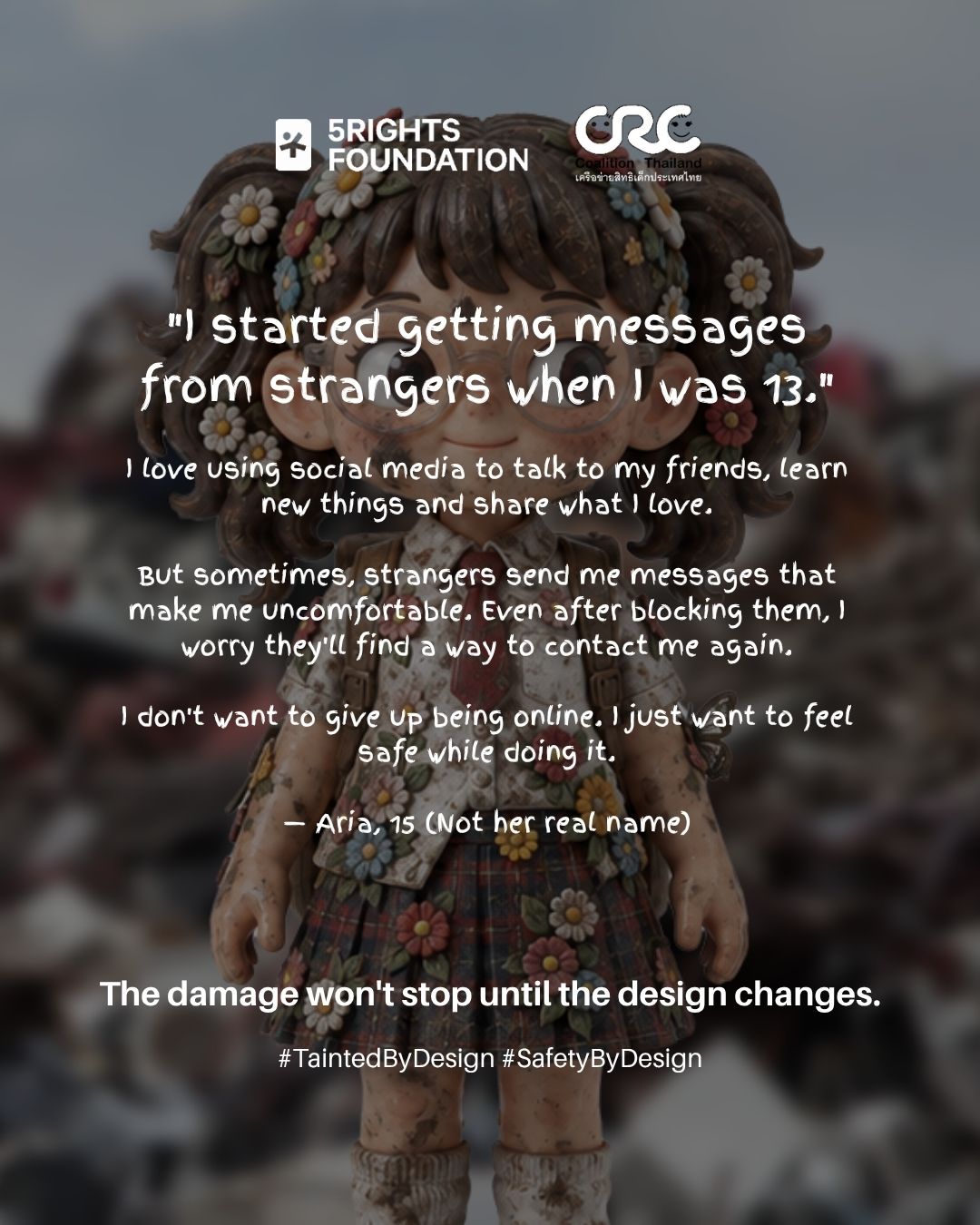
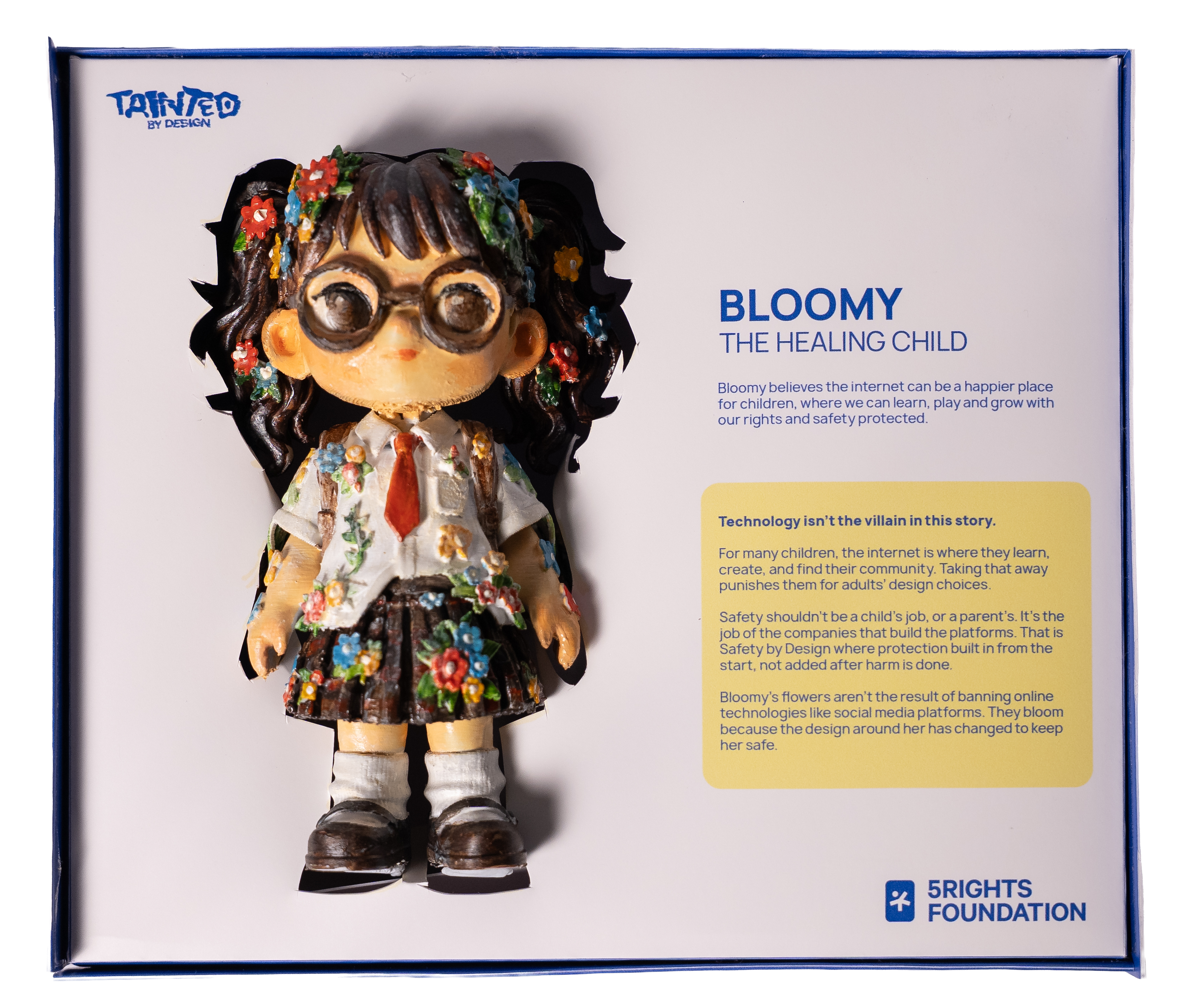
Creative Concept: Tainted by Design At the heart of Tainted by Design sits a childlike doll. It represents children’s innocence, agency and digital rights. As the doll encounters online harms, stains appear on her body, symbolising the impact of unsafe digital environments. However, the internet is not all bad. When she encounters positive content and meaningful interactions, flowers begin to bloom alongside the stains, representing the opportunities for learning, connection and self-expression. Together, these visuals show why banning children from digital spaces is not the solution. Instead, we need to address harmful platform designs while preserving the good.
Execution Livestream Activation: A live feed follows a child’s online experience, showing how harmful content and interactions leave stains, while positive experiences cause flowers to bloom. This shows how platform design shapes children’s experiences online, and why the harms need to be addressed without taking away the good.
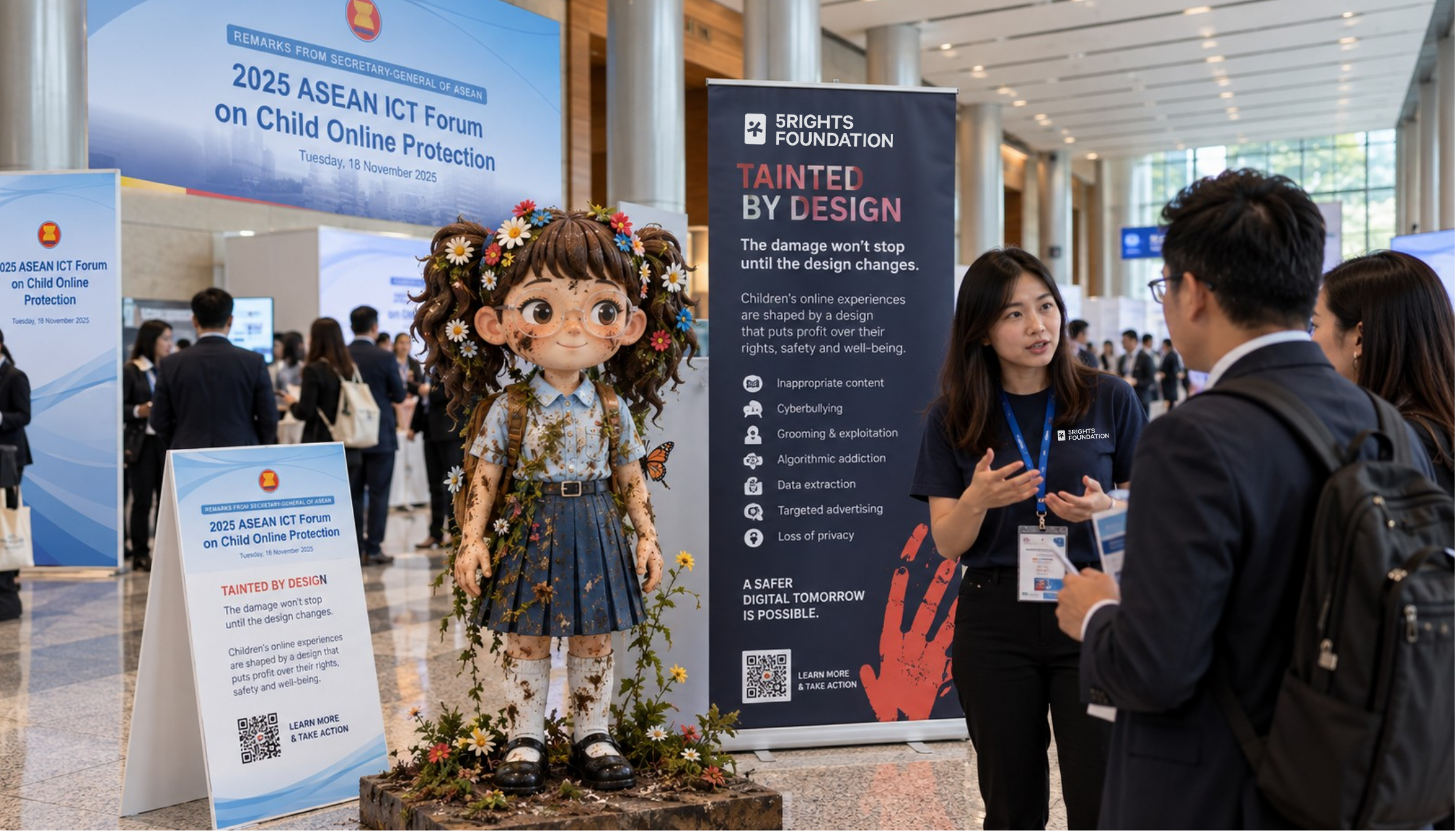
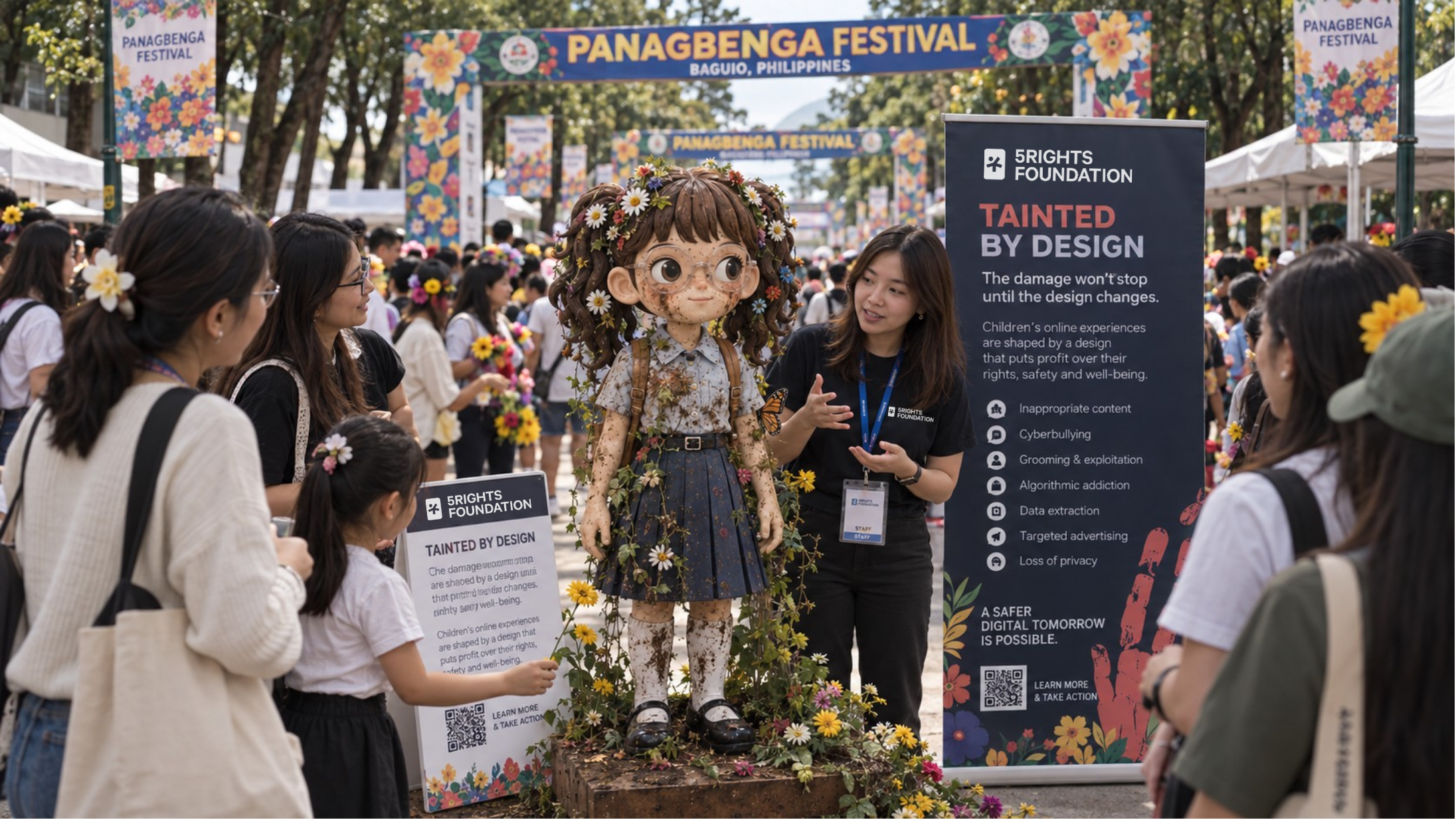
Out-of-Home Activation: The tainted doll from the livestream goes out into the streets to garner media coverage and public engagement, placing it in public spaces and at conferences where policymakers pledge to mandate platform safety-by-design as they clean the doll.
- Hyperlocalised Statues: Doll installations will be adapted to each country's culture and festivals, for local relevance.
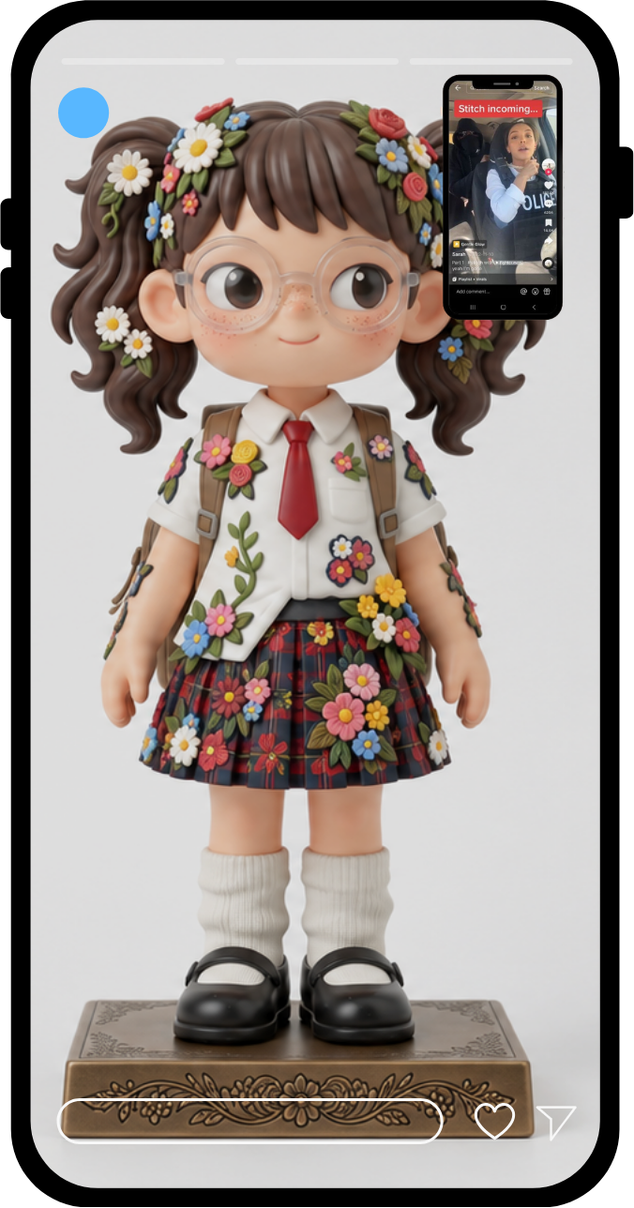
Always-on Socials: Bite-sized posts will unpack specific online harms, real-world stories and campaign messages.
- Livestream Cutdowns: Key moments from the livestream will be repurposed into short-form videos to extend its reach and keep the conversation going.
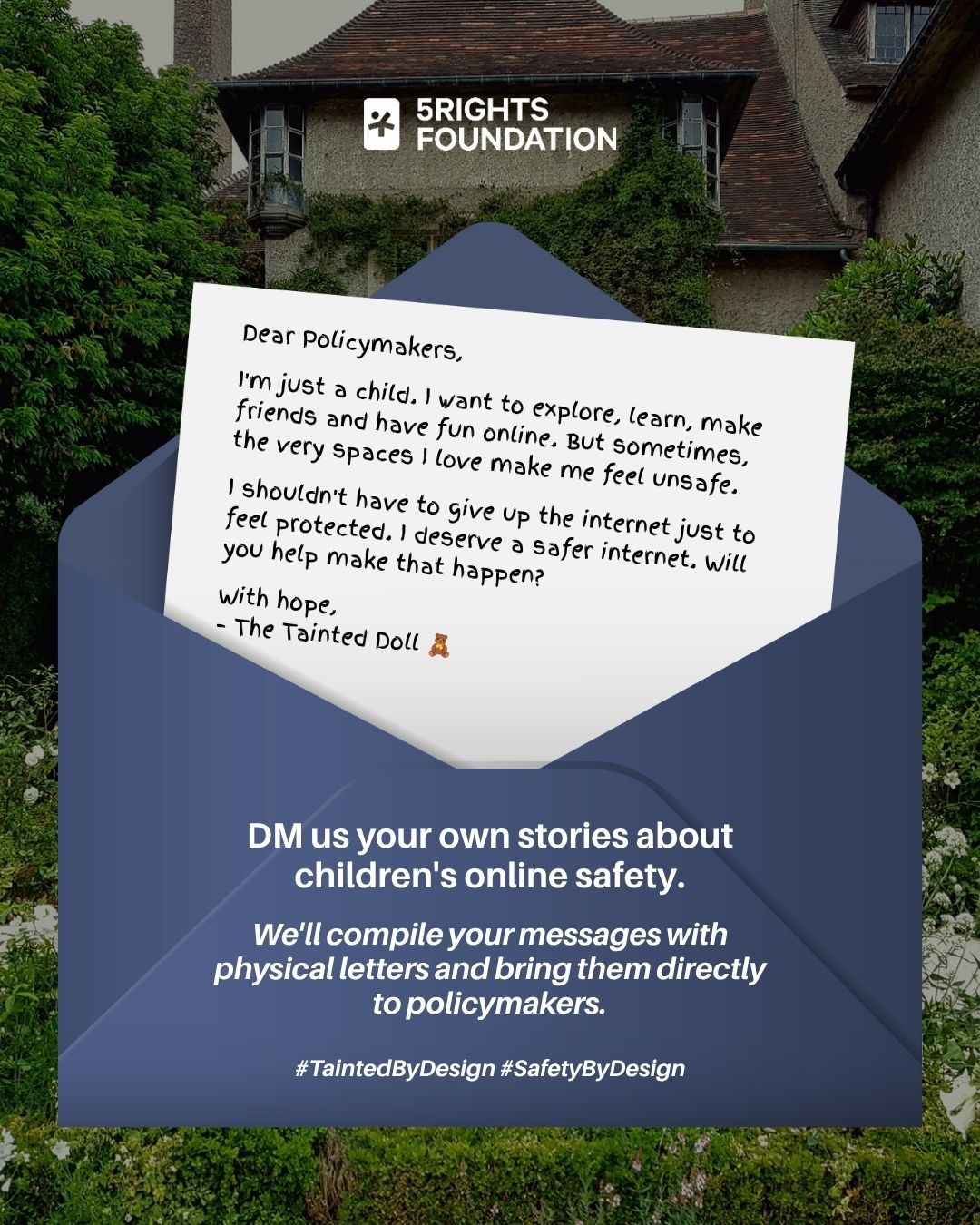
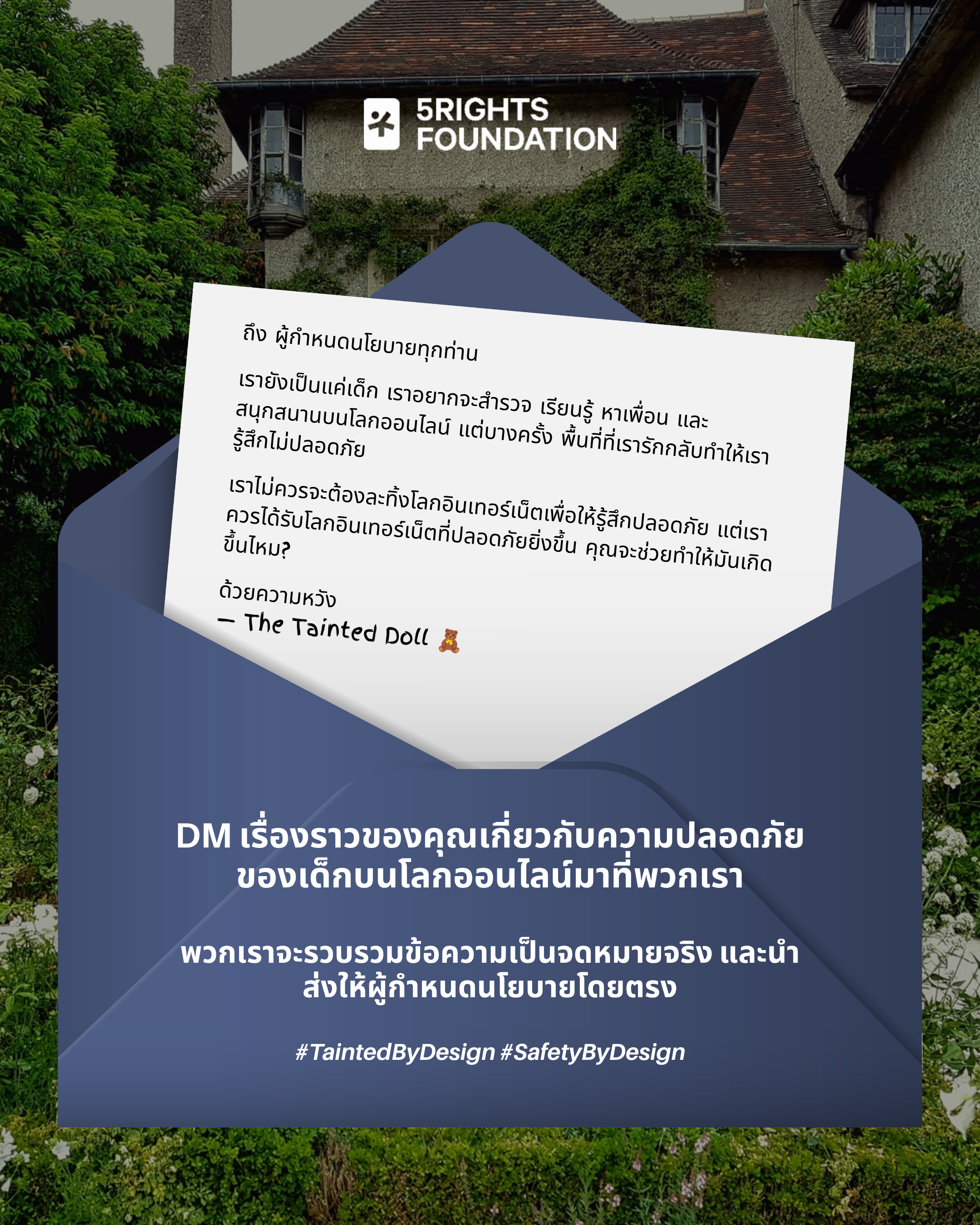
- Other Always-on content: Beyond raising awareness of online harms, posts will encourage audiences to share their experiences with online harms as well as hopes for a safer future with 5Rights. 5Rights will bring these messages to policymakers at conferences.
Microsite: This is where our campaign lives, with an interactive health bar linked to our social media livestreams that reflects changes in the doll’s condition, visually showcasing impact. Audiences can also play a game on the microsite as different stakeholders, cleaning the doll with pre-assigned tools, showing that the most powerful stakeholders have the greatest impact. The game will also appear as interactive in-app ads, broadening its reach.
Toolkit: A digital toolkit amplifies the campaign message, while a physical one goes to CSOs/NGOs with a tear-off postcard on the last page. Audiences can pen their own messages and mail them to us, and we will present them to policymakers at conferences.

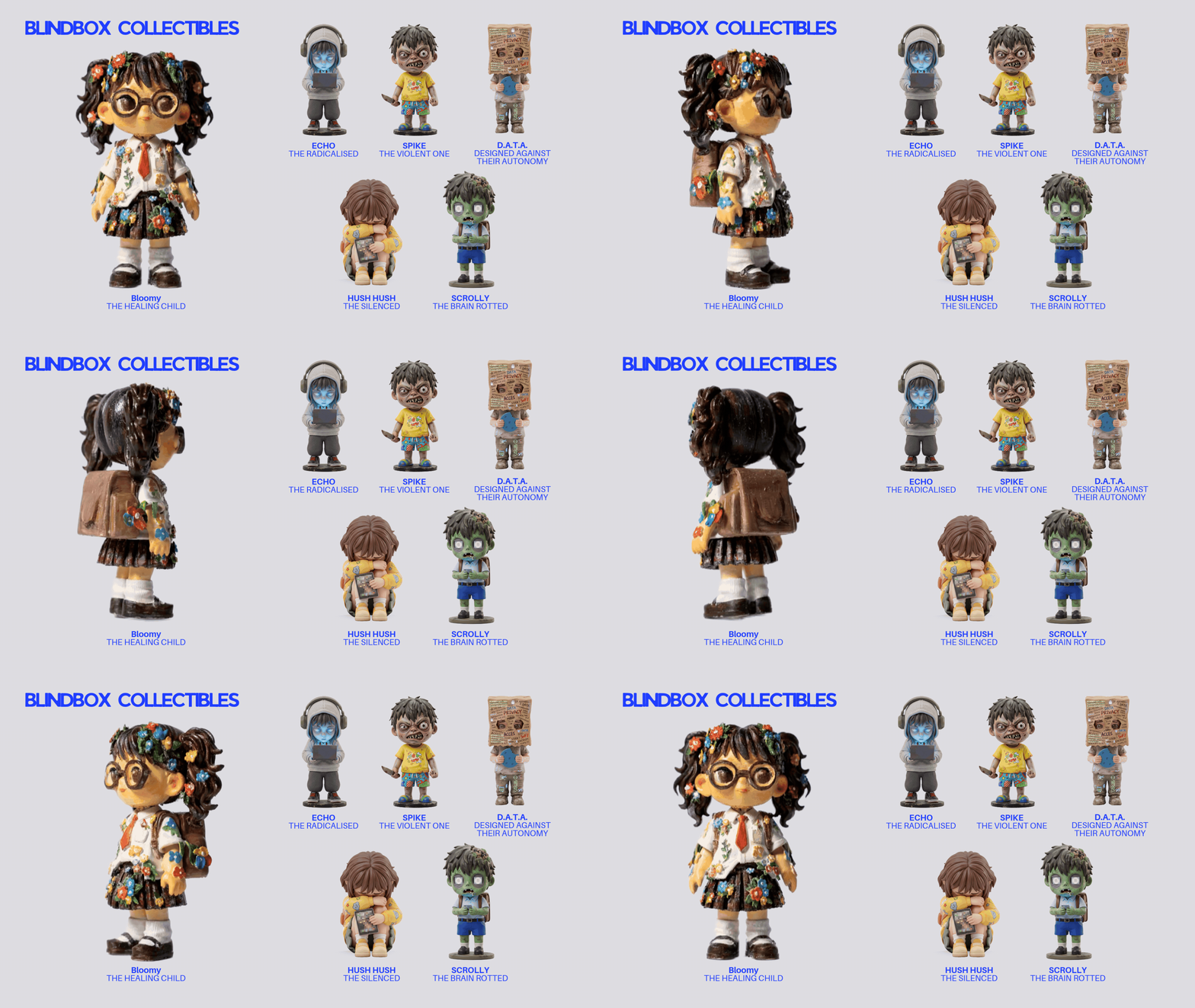
Figurine Blind box: Hopping onto the popularity of blind boxes, we release collectable figurines, designed to showcase digital harms. They are included in media kits as a physical reminder for policymakers and can be launched as merchandise to raise awareness and funds for 5Rights.
Evaluation Beyond each tactic’s key performance metrics, success is determined by policymakers’ number of discussions and level of commitment towards safety-by-design. Having the authority to publicly declare their plans for children's online safety in public spaces is an important first step to a regional movement in ASEAN. Tainted by Design urges policymakers to:
- Recognise that bans are not the answer, protecting children should not mean excluding them from digital spaces they use to explore, learn and connect.
- Publicly pledge to hold platforms accountable, ensuring that technology companies take responsibility for designing and maintaining safer online environments.
- Create meaningful opportunities for children to share their experiences and participate in shaping solutions that affect their online lives. Their voices should continue to shape the development, implementation and evaluation of safety-by-design solutions.
Because the damage won’t stop until the design changes.
References
- 5Rights Foundation. (2025, December 5). From Indonesia to ASEAN: Building momentum for children’s rights online in Southeast Asia. https://5rightsfoundation.com/from-indonesia-to-asean-building-momentum-for-childrens-rights-online-in-southeast-asia/
- CNA. (2026, March 29). Indonesia starts implementing social media restrictions for children under 16. CNA. https://www.channelnewsasia.com/asia/indonesia-starts-social-media-ban-children-youtube-tiktok-facebook-instagram-6022636
- Supramaniam, S. (2026, June 26). Beyond age-based restrictions: Making the digital world safer for children. UNICEF Malaysia. https://www.unicef.org/malaysia/stories/beyond-age-based-restrictions
- Paculba, R. T. (2026, June 29). Swipe Safe project launched in Cagayan de Oro to strengthen child online protection. Philippine Information Agency. https://pia.gov.ph/news/swipe-safe-project-launched-in-cagayan-de-oro-to-strengthen-child-online-protection/
- Seasia Stats, [@seasia.stats]. (2025, December 16). “Asia’s appetite for horror films is strongest in Southeast Asia, with Indonesia, Thailand, and the Philippines” Photograph]. Instagram. https://www.instagram.com/p/DSUnqTekmcE/?hl=en